A Clevelander by birth, Frank Wiborg moved to Cincinnati, attending high school at the Chickering Scientific and Classical Institute. In 1878, he co-launched, with Levi Ault, Ault & Wiborg, a manufacturer of printing inks. Business was good, creating a fortune for Wiborg. Given his business and his wealth, it’s highly likely Farny became aware of Wiborg prior to his induction into the Cincinnati Literary Club in 1889. Wiborg’s growing business, and passion for travel, took him all over the world, where he made well-connected friends. In the late 1890s he had a chance to meet the German Kaiser, who apparently was wonderful with Wiborgs’ children.
Having planned a return trip to Germany, Wiborg commissioned Farny to create a painting that he could give to the Kaiser. Farny named the 1899 painting The End of the Monarch (note: it could have been completed in late 1898, which might explain the 1898-1900 date on the painting below, but I can get no confirmation either way). Before Wiborg took the painting with him, Farny took several photos of it, one of which he apparently painted over for a friend, J.O. Parmlee (see story in first article below). Also in 1899, Farny created a near copy of The End of the Monarch, titling it The Fallen Monarch.
The Kaiser was greatly pleased by Farny’s painting, but felt the name had overtones he did not favor, so the painting’s name was changed to The Bear Hunt.
In 1900, presumably, Farny completed another painting of the same genre, titling it The End of the Monarch. Curiously, he added the date as 1898-1900. It was a strange date for Farny to add, but perhaps it was a small swipe at the Kaiser for changing the name? The definitive reason seems to be lost to history.
In 1943, the Cincinnati Art Museum held a Farny exhibit. One of seventeen paintings lent by Mr. and Mrs. Harry S. Leyman to the exhibit was labeled The Fallen Monarch, dated 1898-1900. However, according to Denny Carter in her Henry Farny book, The Fallen Monarch has the 1899 date (pg 143), while The End of the Monarch had the 1898-1900 date. So, it seems either the 1943 CAM name was incorrect OR Denny Carter’s book has the names switched.
No matter, what we do have is evidence that Farny created three similar works over a three year period, 1898-1900. Here are the three pictures side-by-side.
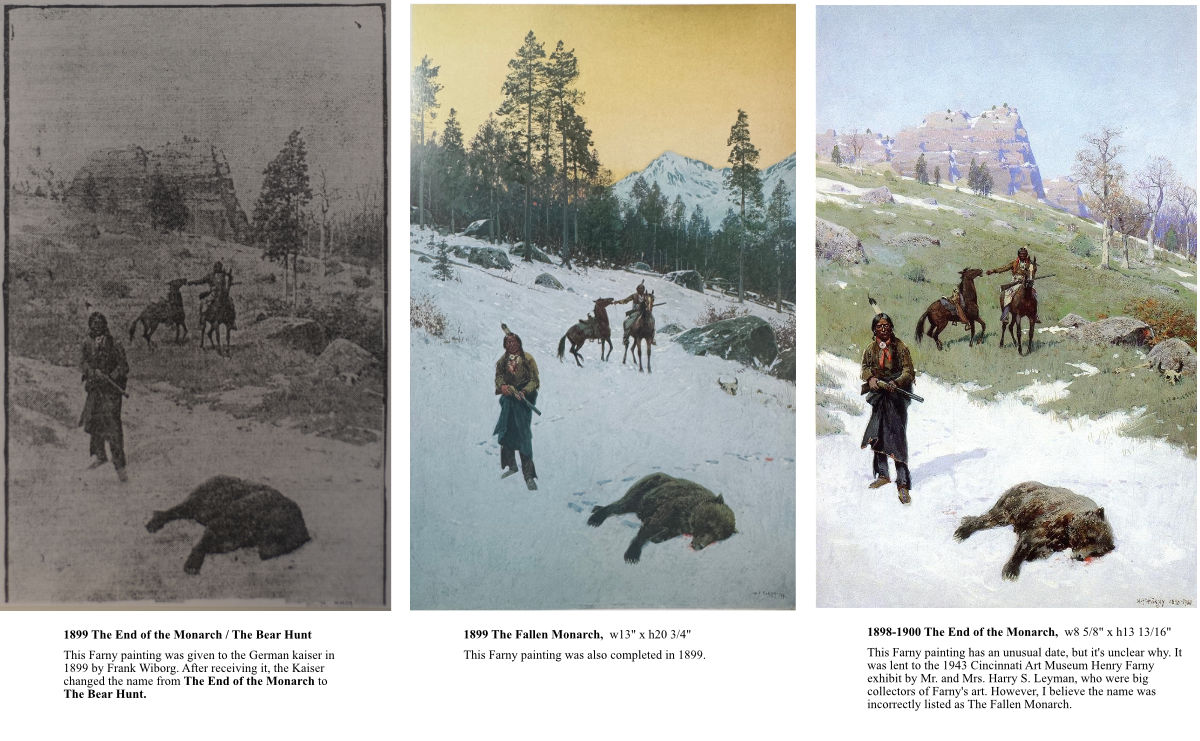
In comparing the three pictures, all have the same main subjects in the foreground and same horses and rider in the middle ground. It’s the background that really separates the three paintings.
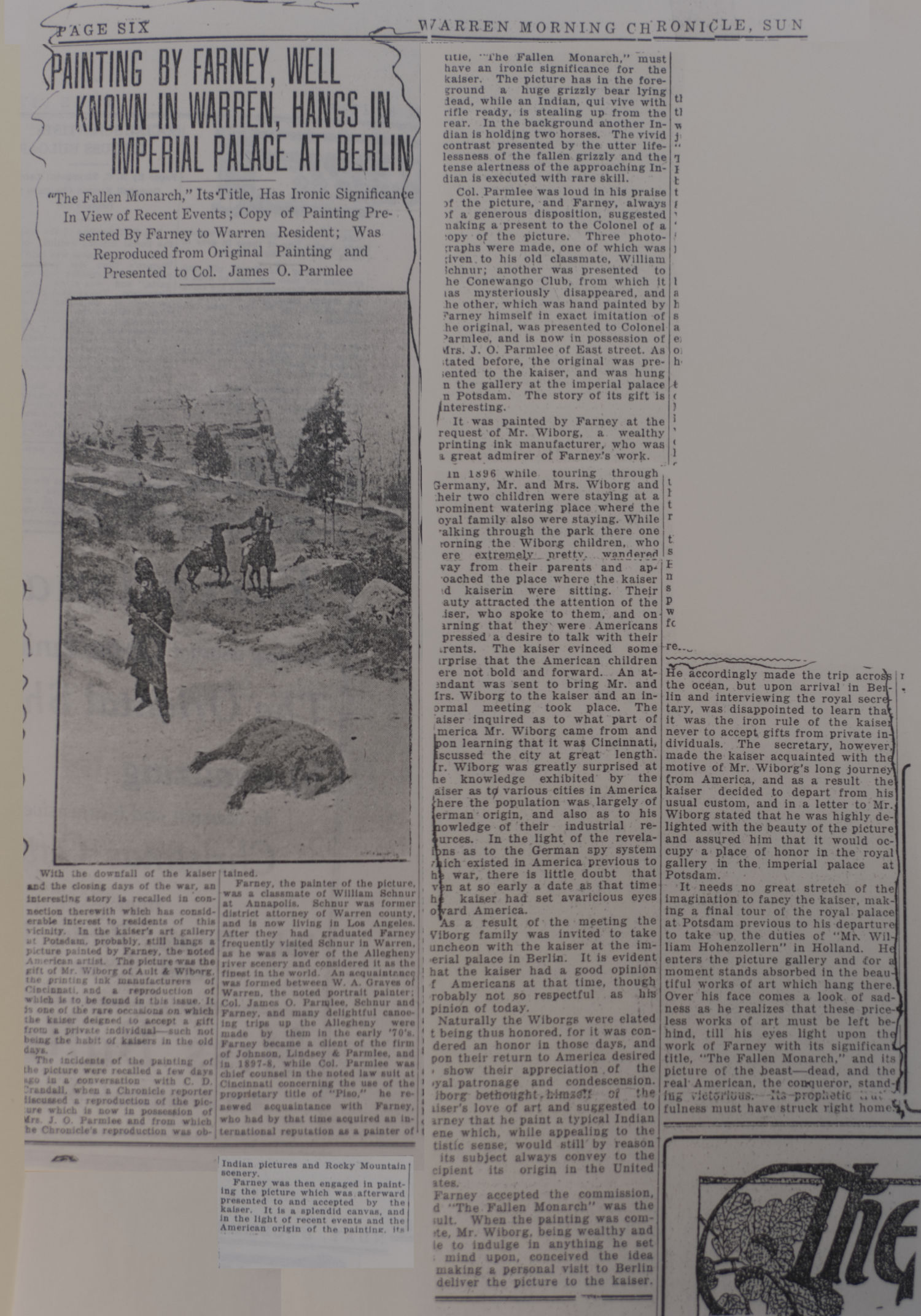
Here is a story on how the Wiborg-to-Kaiser exchange came to pass, at least according to an article from the Cincinnati Library Museum’s Farny Archives which the Farny family saved:
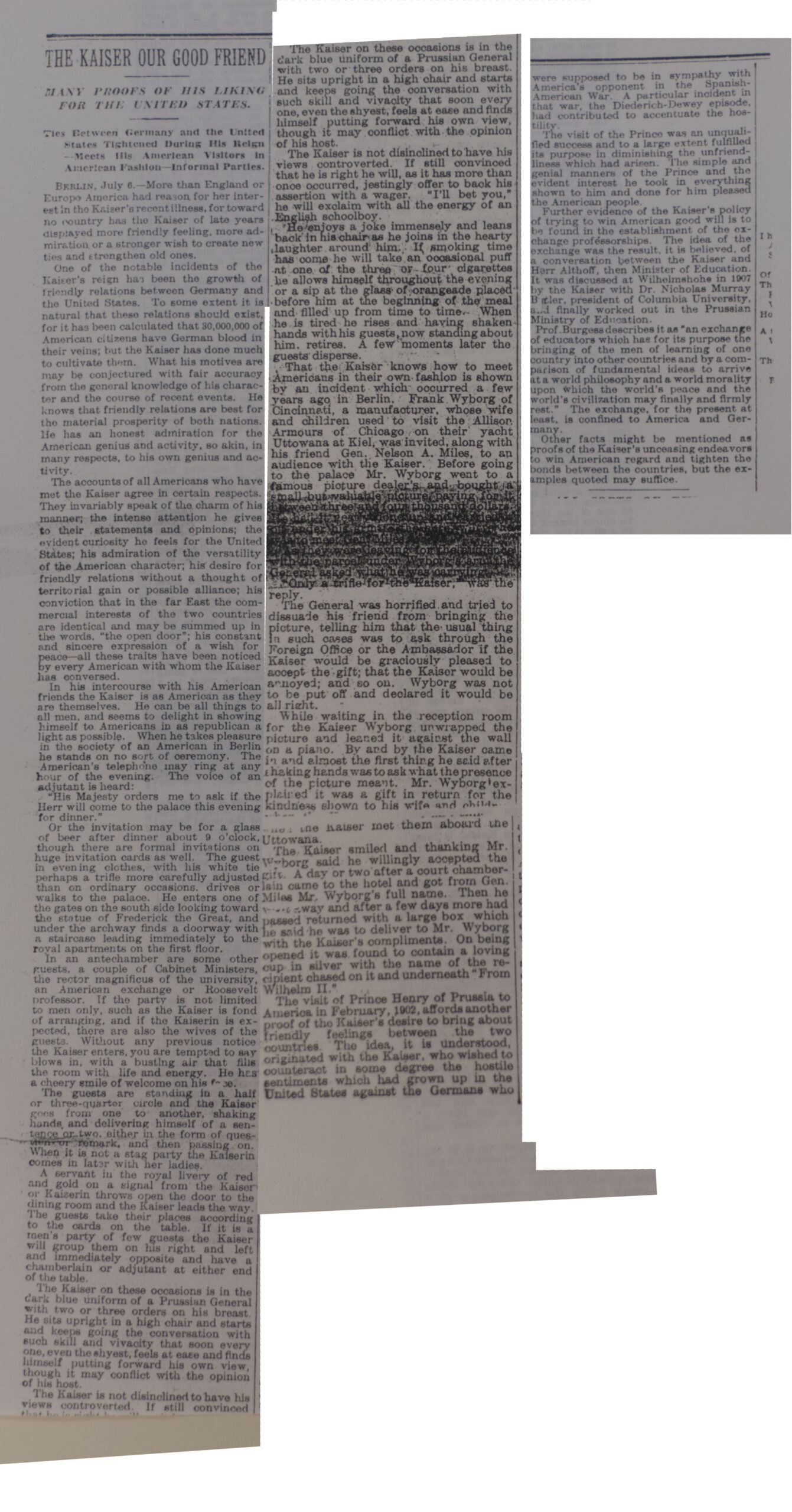
The same library folder also included a slightly different story about how the exchange happened:
My guess is that the truth is likely a combination of them both.